Episode Transcript
[00:00:01] Speaker A: Hey, everybody. Welcome to another episode of Ever Changing and Evolving.
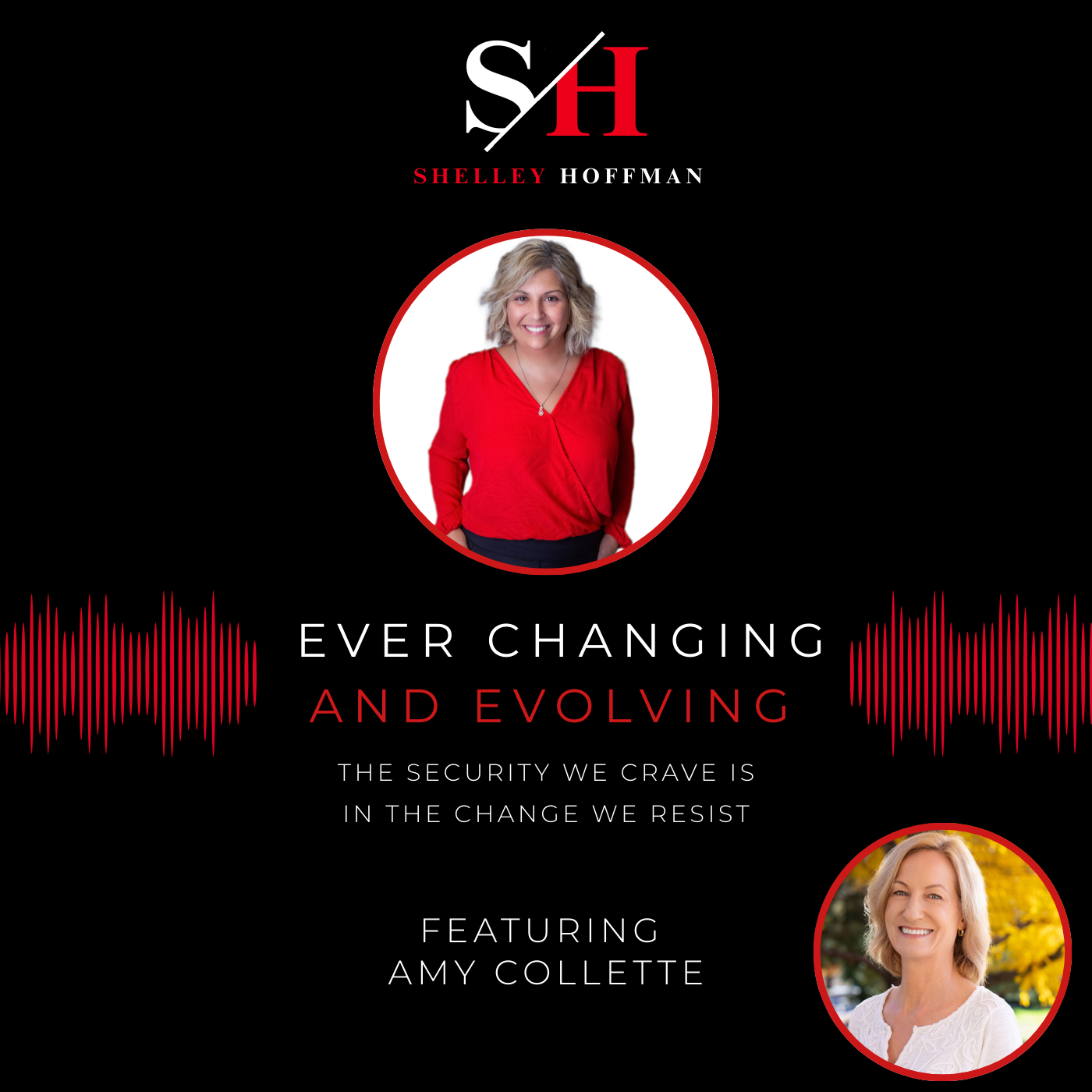
Today I'm here with Amy Collette. She is the.
Her business is called Unleash youh Inner Author.
Amy, thank you for coming today.
[00:00:14] Speaker B: Yeah, so great to be here with you, Shelly.
[00:00:18] Speaker A: So we go back quite a few years ago, about four years. I met you because you actually had conversations with me and worked a little bit because I kind of have a story that I want to tell, which is how we connected.
Can you tell the audience a little bit about what you currently are doing and then we'll kind of dive into how you got there? Sure, sure.
[00:00:36] Speaker B: So I help people write and publish their books.
So I'll just give you a tiny bit of an example. And that is when I first started doing this, I would get manuscripts that people had already written, you know, and they were generally way too long, too much detail.
They would meander here and there. And, you know, it was a little hard to follow in that kind of stuff. So after I did this a few times and I had written my own book by then, I realized people needed help at the beginning of the process, not just at the end.
So that's how I came up with my business. Unleash youh Inner Author is really to help you at the beginning of the process, whether you've written a book before or not that you can follow and actually come out with the book. That is closer to your dream in your head than the reality of maybe doing it by yourself.
[00:01:33] Speaker A: You know, writing a book is obviously a totally different process. But even I have somebody that helps me kind of make clips of the podcast. And she'll say, I'll talk to one person and it's very easy to get a 30 second clip.
[00:01:46] Speaker B: Yeah.
[00:01:47] Speaker A: And I'll talk to someone else who's similar to me. And we kind of start on a topic and we veer off.
And she can't get the clip because by the time we come back, you know, the. That time period is done. So I can only imagine reading manuscripts and people, they're on a path and then they go, here. Do you find that sometimes they don't even come back to the original path that they were on or.
[00:02:10] Speaker B: Yeah, exactly. I mean, this happens in conversation, just like you said, you know, with your girlfriends. You're excited to tell something and. And you start saying. And they go, oh, yeah, and I did that. And. And then you. You're way over here on, you know, their third cousin by the time you're done. And you never get back to that. You realize on the drive home. Oh, I never finished my story. I never finished telling her about that, you know, and the same thing happens when you're writing. So I had a wonderful book that was submitted. It was super long. I mean, it would have been like 600 pages.
And the author was a great writer. She told great stories. But that was her downfall. Where she would get into.
She would say, oh, my wife and I went into a bookstore and we ran into her cousin Dave. And Dave is this great guy, and he's. He's got two kids and his. She's now talking about Dave. And it totally, you know, has derailed the story she was going to tell about the bookstore. Right. So it was.
It was really hard. And so then to go back and rewrite that and take that stuff out. When it's your story, sometimes it's hard to figure out what is too much or what is the tangent even, and take all that out. It's like kind of, you know, straightening out a ball of spaghetti and trying to figure all that out on your own.
[00:03:44] Speaker A: Well, and you don't even know. I always tell, you know, people tell a story and they're. And they're like, well, how does this even apply? And they're like, I'll get to that. Right. So sometimes it does. You veer off and there is a point to the story. And then other times.
[00:03:57] Speaker B: Absolutely. And it can make it more interesting. Interesting, right. You know, instead of just the, you know, chronological story, sometimes those little flashbacks are absolutely great and they give you the backstory, and now you can come back to the core story. And if. If done well, that's a beautiful tool that you can use as a writer.
[00:04:23] Speaker A: Yeah, so. So that's where you are, are now. But I mean, when you were 20, 30 years old, is this what you thought you were going to be doing, or what was your life path at that point?
[00:04:34] Speaker B: That's a great question. When I was 20 or 30 years old, when I was 20, I was still in school, I was in college for a long time. I put myself through.
I'd always been a. A big reader. And I. I would say, man, if just somebody would just hire me to read, that would be awesome.
If they pay me to go to school and read, I'd be happy forever.
You know, it took a long time to get there, but that's basically what I do now. So I've always had that kind of basis in reading and writing and just loving the written word and all of that kind of stuff, but I didn't see a path to make that possible for me at that age, it took.
Took meandering around in some other things, but I did wind up being a professional writer in terms.
Yeah. So before I became a published author, I was a writer for businesses. Right. So a lot of technical science and medical businesses. I would write up stuff about their research or how to use their technology or how to do something, policies and procedures and all that kind of technical.
[00:05:47] Speaker A: Very, very fun stuff. It sounds like.
[00:05:49] Speaker B: Yeah, so it's definitely not my voice. It wasn't the books of my heart. You know, these were manuals and how to's and trainings. I did do training videos and things like that. And that was, that was fun. But I liked all of it because it was learning. I was always had to learn something first and, and then teach it to other people. So it was my happy place. It just wasn't the same as what I do now.
[00:06:12] Speaker A: Yeah.
How many years did you do that?
[00:06:16] Speaker B: Oh, gosh, I did that for a good 20 years.
Yeah. In different capacities. I had my own business with that for a while, worked for different companies and yeah, it was great. And then I wrote. While I was doing that, I wrote my first book. I had had this experience. It's called. The book is called the Gratitude Connection.
And the reason I wrote it is I had gone through a really hard time of where I. I did have that previous business and it had been going gangbusters for like 10 years.
And then I had what I call my own personal recession.
And I had had two big clients and a few other little ones. But my two big clients, I lost within two weeks of each other. Oh, one lost their venture capital funding, so they were just dead in the water. And the other one sold. It was owned by two partners and one partner sold to the other and he changed the business model so he no longer needed me, my services.
So like, it was sudden and I kind of fell into anxiety.
You know, I didn't know what I was going to do. I was totally unprepared for that happening.
And I just, I got into a really bad place and had a hard time kind of clawing my way back out of that.
So that's, that's how my first book came to be because I wrote about what finally did work for me and helped me get out of that state of anxiety and depression.
[00:07:55] Speaker A: You know, what I. I find in the people that I talk with is unfortunately, there's just something hard that happened unexpected and hard.
And then, you know, you can either sit in that and some people just cannot find their way out of it, or there's. There's something. Whether it's journaling, it's meditation, it's a family member, it's a friend, it's.
I remember I ran into a woman who was sat down next to me at the park and she said, you don't look like you want me to sit next to you, but I really need off my feet. And I had the best conversation with her and I learned a lot. You know, she was turned out similar path. Right. So I believe that she was put there to have that conversation. So if you don't mind sharing. And obviously, I think, you know, that book probably inspired a lot of other people, but can you tell us just a little bit of what helped you get out of that space?
[00:08:47] Speaker B: Yeah. So you touched on it. Shelly, with. You know, there. There are things that happen, and usually I say transformation doesn't happen by everything being just fin or the same. Right. Some big thing happens, and it may not be a bad thing or a traumatic thing, but it often is. You know, it's often something. And. And you know, your story is similar where, you know, you have to. You have to face what's next for you in a way that you didn't plan on.
[00:09:19] Speaker A: Right.
[00:09:21] Speaker B: So, you know, just like you said, you. You find some person or thing that's going to help you come out of it. And for me, it was this practice in the Jewish tradition called Hakarat hatof. And it just means giving thanks for your blessings a couple times or a few times a day.
And at that time, I was sort of so far down in my, you know, my cave that I said, well, that sounds good. If I had anything to be grateful for, you know, so I kind of forced myself to do it.
And it started making a profound difference within just a couple of days.
[00:10:01] Speaker A: Really?
[00:10:01] Speaker B: Yeah. Like, I didn't realize when you're. When you're in anxiety and in depression, you don't realize kind of how deep it is, how deep your rut is.
And I started seeing that what I was doing was. Now, I describe it as like a pie. So if you think of your life as a big, beautiful, juicy pie, right, and there's different slices, different aspects of your life within that pie, I was focused on one slice that wasn't going right. That's all I could see.
And once I started practicing gratitude and I was like, oh, yeah, I have all these other things, you know, my home, my relationship, my dog, my friends, you know, like, all these other things were awesome and amazing about my Life. And I was not paying one bit of attention to any of it. You know, I was just focused on this one place that was going wrong, which was my business.
And so that it just gave me perspective, and I could kind of come up a little bit out of my rut and see that beautiful piece.
So that's really what's got me started on other practices of gratitude, positivity, you know, replacing some of those bad habits of getting into those negative thought loops with more positive ones, you know, and that literally changed my life. Within about five days. I was actually getting phone calls for job offers and work offers, you know, five days. Because my energy changed. Nothing about the world changed, but I changed. Now I became attractive. Magnetic, right?
Because that kind of energy is much more attractive than sad sack, you know, desperate. Because I called it being a bad date in business. I was that desperate person who'd be like, hey, Shelly, do you have any projects for me? And you're like, oh, not right now. Talk to you later.
[00:12:08] Speaker A: You know, well, because energy is contagious. And, you know, even, you know, everybody has a. Has bad days or even a bad week. And, you know, you walk. You walk into a store, you walk into your house, you walk into the office. And if somebody's having a bad day, that the energy is there and people can. Can feel it, right?
And they don't even know that they're giving off that. That energy, in my opinion. I don't think that they do, or at least I hope that they don't. But.
But it's. It's funny you say about finding something to be.
For gratitude. I'm. I'm. Taylor had a journal. That's my daughter should. A journal. Five minutes of mindfulness, and she had her name on the front of it. She wrote nothing in it. Now, Tay was probably 17 when she got it. And so she was cleaning out a room the other day, and she said, mom, do you want this? And I didn't cross off Taylor and put Shelly. I just said, sure. And now when I open it up, it says Taylor. But I've only been doing it five days, Amy. And two days ago, you. You write something in the morning, you write something at night, and it says, you know, throughout the day, what did you have to be grateful for? And I. I found myself. I was being a robot. Well, I'm grateful for my kids. I'm grateful for Jamie. I'm grateful for. And I.
I did that the first day. And the second day, I'm like, no. What are you. What do you truly like, you're all, you know, not that I'm not grateful for those things, but.
But to really search and, you know, what was new, what was different this day that I'm grateful for that wasn't there maybe the day before, the day before that. And the mindfulness, it's so I'm trying to envision where you were and, you know, what. What happened on day one, you know, what were you grateful for? What did you look around like, what was the mind shift change where you said, I, I need to do this? And. And maybe it wasn't anything profound, it was just something in you. But do you remember what Day one.
[00:14:00] Speaker B: Yeah, absolutely, Shelly. Yeah, absolutely. And thank you for. For asking about that. Because here's the thing. As a writer, I didn't want to do a journal at that point, because as a writer, I get in my head, once I start writing a list, I'm like, oh, no, that one should go first. Or that, you know, I start instead of staying with the feeling of gratitude. So that was my focus.
First of all, I was just feeling bad all the time, or I was feeling numb. That was kind of an improvement over feeling so bad. So my goal was just to feel a little bit better, right? That's. I wasn't looking for happiness or joy or any of that stuff. I was just looking to not feel as crappy as I had been.
So what I did, I always know this is like. This is like a calming thing, you know, when you put your hands on your heart, on your chest like that, it just kind of like makes your nervous system go, okay, I'm safe. It feels safe, right?
So that's what I would do. I put my hands on my heart like this, and I close my eyes and feel gratitude. I just wanted to feel the feeling of gratitude.
And that was. That's what made the difference for me. Instead of focusing on a list or something like that, I focused on the feeling. And then things started coming into my head. Oh, yeah, I have this beautiful home I'm living in. Oh, yeah. I just walked my dog in the beautiful weather, and my husband comes home every night, and we have a great evening together. And, you know, my friends and all that kind of stuff, I just. Just started kind of flooding me. And I was a little overwhelmed because I didn't think I had anything really to be grateful for.
[00:15:47] Speaker A: What made you decide to take that and put it into a book?
[00:15:52] Speaker B: Because it changed my life so much is the quick answer. Right? Because I went then. I was actually training to be a life coach. At that time.
And so once I started working with people one on one, I started recommending some of these practices, and they were seeing huge changes and, you know, boosts in their own. In their own positivity and happiness and connection with people and all those wonderful things that I had realized.
And so I thought, you know, it's kind of selfish to keep this to myself.
I really wanted to get it out to, like, everybody in the world needs to know this, you know, and back then. So I published my book in 2015, my first book. And there weren't a million gratitude books back then. You know, it wasn't a thing that you heard about all the time. Now it is, thank goodness, right? But it wasn't back then. It was still kind of new, and people were like, oh, what the heck do I need gratitude for? Like, what's the big deal?
And so I wanted to tell people what the big deal was because it was enormous for me. And so I just felt like I had to do it. I felt compelled to write that book and share it.
[00:17:08] Speaker A: Now, you obviously didn't have unleash your inner author at that point. How did you go about getting your book published? Was it connections or.
[00:17:19] Speaker B: No, it was the. It was a school of hard knocks, you know, I mean, I had been. I had been around writing and publishing. You know, we were publishing books for companies at that time. So I knew something about it and I knew some people in the business. So, you know, as I do, I try to do it all myself first, and then found a publisher, local publisher here in Denver, who was interested. And so she helped me put it together.
But what I didn't know about publishing then was that when you use a publisher, they often just take it and they're like, okay, see ya. And they kind of make it their own.
You know, I didn't have any more creative control over what it looked like, what it. What the editing was, all that kind of stuff. And I came out with a book I was not happy with.
[00:18:08] Speaker A: Did they make a lot of changes to it, like. Or the COVID look like how you want it to look?
[00:18:12] Speaker B: I had a very specific idea for the COVID and they did something totally different and wouldn't change it.
And it didn't. I didn't feel like it looked professional, you know, I. I just didn't. I wasn't proud of it. So I was a little. I didn't want to hand that book to anybody and say, here's my book. I'm all excited because I wasn't. I didn't Feel that way.
[00:18:35] Speaker A: Do you think that had, like, a lot to do with the path that you chose to take? Because, I mean, when you and I have conversations, you really say, I want it to be yours. I want it to be, you know, what you, what you want it to be. And I'm here to guide you.
Yeah. Through that process.
[00:18:51] Speaker B: So, yeah, I mean, so I went through those lessons so that I can share those with others too.
[00:18:57] Speaker A: And we thank you, Amy.
[00:19:00] Speaker B: I don't want anybody. I mean, so when I, I took my book back, fortunately I retained the rights to my.
So I could just say, okay, thanks, I'm gonna go do my own thing now. I put together my own team, republished it with the COVID I wanted and all that stuff. I had a brilliant team that I work with and still do. It's morphed and changed a little bit, but still brilliant team. And yeah, I created the book that I really wanted to put out there that represented me and the, the excitement and energy that I was wanting to put out there, you know. So, yeah, I feel very passionate about that now because when I got my first box of books and you open it up and I was just overwhelmed, I, I cried what I say, I cried projectile tears.
And that's what I want for everyone.
[00:19:53] Speaker A: Yeah.
What was the time difference from the time you first published it to the time that you publish it again?
[00:19:59] Speaker B: It was a couple of years. Yeah, it was, you know, it was a hard process to learn, but I learned a lot of those hard lessons then too, that now I can help people smooth over and not have to deal with those. And I just know, like, there's a lot of forks in the road. There's a lot of decision points that you have to make as a writer and a. And when you're publishing your book.
And so now I know what the consequences are of those decisions and I can, I can consult with people and tell them, hey, okay, that's. I see that you want to do that, but here are some things that you're going to have to deal with down the road from that decision.
You know, here's some other things you might want to consider.
[00:20:41] Speaker A: Well, because you know that my. One of my favorite things is you don't know what you don't know. And so, you know, as you know, my industry is real estate and I kind of compared. Consider me a first time home buyer. I've not, you know, when you've never done something, you don't know all the decisions and all the steps and the processes and what really should come first, you know, so that you're not backtracking or wasting time in, in the two years that it took, from the first time it was published to the time you were able to publish yourself. What were you doing career wise in those. In those two years?
[00:21:13] Speaker B: Yeah, I was still. I was still a writer and editor, but I had gotten into some team facilitation, which was really, really cool.
I. I learned that at a company that I was working with and it kind of tapped into some natural talents of mine that I didn't know I had, you know, so that was really cool. And it was a wonderful thing to, to take into when I did start my Unleash youh Inner Author business. Because I now teach group programs and, and have communities and of authors and things like that. And so skills of running a meeting and being able to kind of balance the energy and make sure people don't run over each other and you know, all those kinds of things that you can have a really productive, profound conversation and, and maybe even get to some aha. Moments and realizations, you know, I teach retreats now too, and workshops. So all those kind of skills, everything I'd done previously in my career was now coming together in this new business.
[00:22:25] Speaker A: What kind of retreats and workshops? Like what. What would somebody, if somebody was interested in being a part of that, what. What does that look like? Is it like someone that's looking to write or.
[00:22:36] Speaker B: So, yes. And so, yeah, I do those. An unleash your inner author cohorts. So they're groups where we do this together because, you know, all the things that you go through as a. As a new author, you realize everybody else who's doing that kind of comes up against those, you know, barriers or imposter syndrome or, you know, writing entanglements. How do I. How do I explain something like this or how do I do certain things? We can talk about that as a group. So you get my perspective. But you also get their perspective because they're in the deep of it, just like you are.
But I also teach other classes that are more personal development.
So most all the books that we do are personal development kinds of books. They're about transformation, right?
So those are the kinds of retreat topics that I speak on too.
[00:23:30] Speaker A: Do you ever tell somebody that when they, they send you a book that.
I know, me like, I was.
I was kind of like the manuscript that was 600 pages, right? Like, I'm like here and here and here and here and here. And turns out it was more of a personal journey for Me that you helped me with to get to where I am now. I'm a little bit more focused and whatnot. But where people just really don't know how to tell their. Tell their story. You know, they don't. They don't really know how to start putting it to paper. And if that's the case, what advice do you have for someone who just. They just don't even know where to start?
[00:24:06] Speaker B: Yeah, so that's a big question. So I'll take kind of a certain perspective on that.
So I find what helps is when you're in your own head about your own story, because, you know, you don't want to say, I was born on.
[00:24:24] Speaker A: I can't take it that far back, really.
[00:24:26] Speaker B: Generally, it's not that helpful. But here's what can help in figuring out what you want to say and how you want to say and how much of your story you want to tell is, you get real clear on who this book is for.
Who do you want to help make a transformation?
Like, it's probably something similar to a person like you who was. Who was where you were at back then, if that makes sense.
[00:24:57] Speaker A: Yeah.
[00:24:58] Speaker B: So it's. It's kind of like the younger you, the less experienced you, and plenty of people are at that stage. Right. Are in that place, and now you are past that. You've been done some transformative work, whether it's through your own experience and through writing it, talking about it, telling your story.
When you get into their head, then, you know, it becomes much more clear that, okay, I don't need to tell that story, but I absolutely need to tell this story because it's transformational.
It's going to help them get to that next level that they need to get to.
So that, I think, is one really important aspect, and there are others, too, but that's a really, really important aspect, is to. Is to kind of get a little separation from yourself, a little objectivity, and look at it from your reader's point of view, get into their head and heart. So you know how to start and how to. How to get them to where they need to go. Because you know what they need. First, second, third. Third.
[00:26:06] Speaker A: Yeah, the.
So the other thing I like to touch on, especially when somebody is. Has started their own business and their business is going successful. You know, we use the word entrepreneur, which is some people are scared of it and some people think it's super easy. Right. I always say the people that think it's super easy probably haven't started it yet. But what Was it. What was it like? Like, what was the decision to say, I'm going to create Unleash youh Inner Art Author? What.
What was the emotions of feeling in the place that you're at where you said this? I'm going to start it and I'm going to do it and I'm going to help people?
[00:26:41] Speaker B: Yeah, it was. It was less, less distinct than that. It was a little bit more organic, you know, because after I published my book, people started coming to me and saying, hey, you know, I've written this book or I want to write this book. How do I do it? What are all the things? And so, you know, it kind of helped me get clear on what are the actual steps and what do you need for second and third, like I just said, so it helped me be able to get.
Get a system together, kind of put that together and just start helping people here and there, kind of on the side. I was still working corporate at that time, and so I.
That was. That was real helpful to me to kind of start in that way. But then I became more passionate and, you know, all these things, the things that I had learned and I realized everybody else needed to know those same things and that I just really found that I loved the coaching, not just creating a system, but actually talking through those hard things. Because what happens for me is I hear the story behind the story. It's not going to go in the book, but people generally need to work through that and get really clear on how they want to show up. As an author, as a. As a leader and an expert in this think topic that they're talking about, how did they want to show up? So it takes some kind of sussing out and figuring out what you want to. What your vision is and how you want to show up. So that's another aspect, another perspective. Right.
And then really just getting clear on that. So that, that helped me get clear on my own stuff as a business person, as an entrepreneur, and say, I think I can do this. I think I really want to do this, and there's a market for it.
[00:28:35] Speaker A: And do you think going back to energy and you know, how energy attracts people with similar energy, you know, by. By organically going into it, you probably had built yourself a little bit of a community, Right, that you could lean into. But was it still like kind of a hard, like to say, hey, I'm actually going to do this to, you know, like the business plan of it? Right? Yeah, you had to have a business. Not everybody has a business plan, but I feel like, you know, coming from the corporate world, you might have been a little bit more into the steps of actually you created a business, you know.
[00:29:12] Speaker B: Yeah. And like you said, Shelley, you know, I think one of my. I had already had run a business before, and so it was a, it was a different audience. Right. So it was more B2B, my previous business, and now this was more B2C.
[00:29:28] Speaker A: What that means, believe it or not, Amy, a lot of people don't. They don't know what.
[00:29:31] Speaker B: Right. You're right. You're right. And I. Yeah. So business to business is B2B. And then B2C is business to consumer or just, you know, kind of that one on one personal relationship like you and I have developed.
[00:29:44] Speaker A: Right.
[00:29:45] Speaker B: So it's, it's a little bit different and it took a little, a bit.
[00:29:50] Speaker A: Of.
[00:29:53] Speaker B: Understanding that, but a lot of the concepts are still the same. I need to know what your goals are. I need to know what kind of support feels really good to you, you know, as a, as a client and so that I can bring my skills and experience to you in the best way for you, not just in a, some kind of rubber stamp way that might work for, you know, for all this type of business. Right. It's just more customized, it's more personal.
So, yeah, it was, I was excited to start my business, but I also, you know, probably like every other entrepreneur, you think once you start getting some business, it's just going to go steady, line up. Right.
Steady growth and scaling all the way. You know, when really the entrepreneur journey is much more of an adventure than.
[00:30:46] Speaker A: That from a standpoint of finding your, your community, finding your clients.
You know, I met you at a conference, right? So you'd come to the conference and you had offered up, you know, conversations, like really, there was no pressure or anything, but you offered up conversations for anybody that attended the conference. Was that something that you, you learned would elevate your business? Was it something you kind of organically fell into? Like, how did you find your people?
[00:31:16] Speaker B: I guess. Yeah. So that I, I think I spoke at that conference as a speaker. Yeah. So that actually is. I, I find that my most successful authors are the ones who get out there and speak and really get their message out there, get on stage and, you know, shine their light from the stage as well as the page.
So I, I find that that's really, really great. And I did a lot of that. I still do some speaking. I'm, I'm much more cognizant of exactly who I want to Speak to, you know, so like, just like anytime you write, you want to write for a particular audience. Right? Same with speaking, you want to find your kind of soulmate audience that's going to really get you and want to talk to you and, and be excited about the kinds of things that you might be able to help them do.
So that's, that was great for that conference and a lot of other kind of conferences, even networking and things like that. But yeah, I'd like to have, I, I need to have a personal conversation with people to understand and they need, they need it too, to understand if we're a fit to work together. Right. If that's. If I can provide what you need, if your work is a good fit for, you know, what, what I can help you with.
[00:32:35] Speaker A: So because you're, you're more than just an editor or publisher or any of those pieces, you know, you really are. I look at it as almost like a partner through that process, like someone to kind of lean on and guide and support, which in, you know, a lot of times, again, I relate things back to what I do. I'm a teacher, you know, the first part of my life for the first century, half century, as my daughter likes to say now Realtor, going into the second half century of my living. But it's all, you know, it's guiding people. It's like taking what you know and, and sharing it. And that's what it sounds like, at least to me. You know, that's how your book came about. That's how your business came about. It's, it's. You went through that process and you're sharing that knowledge with, with people. So there's instant value. And I know the going on stage and telling that story, but it also validates that I'm not just putting words on paper. I put. Lived this. I've gone through that process on someone you can depend on and that's, that's impactful.
So any trial or tribulation as you, I know we're kind of talking about your second business, but any, I'm going to say time waster or marketing, like, I can't believe I did that. That you could share to kind of help people that are starting out in any type of business thing, you know, if I, if I had to do it all over again, this is the one thing I would not have done the way that I did it.
[00:34:02] Speaker B: Yeah. The thing that pops into my head when you ask that question, Shelly, is I wasn't clear on my audience at the beginning. Right. And it's shifted and changed over the years, but that always helps. People are afraid to niche down into. They're afraid they're going to leave somebody out if they say, I work with women over 50, that no men or no women of other ages are going to come to you. And that's actually not the case whether it's for your readers of your book or for your business.
But it can feel very scary to narrow down. But when you do, it makes it so much easier for your client or your reader to know that what you do or what you write about is. Everything is absolutely tailored for you. It's just for you, you know, in your situation and what you're, the transformation that you're looking for, it's so much easier. And so that's where I wasted a lot of time in the beginning, was going to every networking group and talking to everybody, including, you know, and I get on the phone or the zoom with people and they'd say, well, I want to write this specific kind of children's book.
And I'd be like, okay, I'm not being specific enough because I don't do children's books.
You know, for a couple of my near and dear clients who've done other books with me, I have helped them with that. But that's not my specialty. It's not, you know, I also don't do fiction books. I can't coach you and help you in the same way with your fiction book that I can with your personal development non fiction book.
You know, that's my, that's my special place where I can absolutely help you and help bring out that story.
So I, you know, I wasted a lot of time talking to a lot of people that I couldn't really help because I was attracting too big, too broad spectrum of people. You know, so once I narrowed that down, now I very, very rarely get any kind of inquiries for the types of books that I don't do. Now I can recommend somebody to talk to, but I just don't get those inquiries anymore because I'm more clear about that. So when you're starting a business that's really important to do and to get some help with from the get go.
[00:36:36] Speaker A: Yeah, that and that, and that makes sense. And that's just not your, your business. That's almost any, any business.
[00:36:42] Speaker B: Yes.
[00:36:43] Speaker A: Right.
[00:36:43] Speaker B: Absolutely.
[00:36:44] Speaker A: Yeah. Yeah.
[00:36:45] Speaker B: Because you, you have to know who you want to work with and who you can most serve.
[00:36:52] Speaker A: Yeah. Kind of take that for a minute and, and ponder that. I know a lot of personal development leadership Things I've done. It's one of the first things they say is, who are you? Who is your target client? Who is your audience? Who is your, you know, I like your word of you use soulmate. The soulmate who's going to, you know, be in the audience or the book sounds a little bit nicer than the, the target audience or the target client.
Going back to before we went live, and I said, guinea pig. And you're like, I, like, I'm always changing things. I'm like, who's going to be my, my test person for this new setup that I have or this, you know, new crazy thing that I want to, I want to try? And I'm just always thankful and grateful for the people that.
[00:37:36] Speaker B: Are part a.
[00:37:36] Speaker A: Part of my life and part of my process and say, absolutely, you know, this is something that, that I, I want to do.
And I, I feel like I surround myself with, you know, they say the five people you surround yourself with. And I, every time I look around and I look at the people that I, I really have in my life, like the core, they're transformation type people. They say, they say, yeah, change is a little bit scary, but growth comes with, with change.
Which is probably what, even without knowing your story four years ago, which is probably why I was at your energy is what I was attracted to, because it's just at that point you probably had narrowed down who your person was, and I fit right in that category, right in there.
I mean, I think you said 50, but in my head, I'm like, I always tell people there's something between the age of 35 and 55, at least in, in my world, where people, that's where I find people going through transformations. And, you know, I meet them sometimes in real estate, sometimes at networking events, and sometimes just traveling. It's who gravitates to me, I think, with their stories.
[00:38:42] Speaker B: So.
[00:38:43] Speaker A: Yeah, what, what else would you like to, to share? Because again, the, the real mission behind the podcast is to not be scared of change, to take a chance to know that there's other people out there that, you know, maybe the first try didn't go as well as they thought, but they just kept, you know, kind of chomping at the elephant a little bit, I guess, is one of those sayings. But, but what would you like to share with people who are teetering on, on, on going after what they're passionate about doing and helping people?
[00:39:10] Speaker B: Yeah. Yeah. Well, I like that word. Evolution, you know.
[00:39:14] Speaker A: Yeah.
[00:39:15] Speaker B: And, and I think if you can think of Yourself as evolving, which is, you know, a word that's near and dear to your heart.
I, I think it gives us a little bit of grace. Right. Instead of saying, oh, I failed at that, or this failed or that failed, it's more like, okay, it's time to evolve. It's time to graduate to the next.
That's how I do it.
[00:39:41] Speaker A: And what are you going to do with it? Right.
[00:39:43] Speaker B: Yeah, I feel like, okay, I'm leaving that behind. I've graduated from that now I'm moving on.
You know, I'm evolving in some other way. And yeah, it might be squirmy or uncomfortable or painful even, you know, to do that. But when you look back, I love to do this where I kind of, you know, I don't want to focus on the past totally. But I'm a big believer in mining your own stories for what you need from them.
[00:40:14] Speaker A: Right.
[00:40:14] Speaker B: So if you, all of us have stories we can look back on and we kind of don't want to open that door and look at that.
But if you do, I mean, you've already lived through it, right? It's, it can't hurt you anymore. Right. So if you open that door and you look at your past stories and say, where was I? You know, like we've talked about today, what, what did we learn from these things?
What more can I glean from that?
Or why is it showing up again for me to take a look at or whether that person came back into your life or whatever, there's an opportunity to take a look and say, what more can I get out of that that I can take forward into my next evolution, into my next thing that I'm doing so that you're always kind of really looking on the positive instead of the negative about that of like, oh, that sucked. I don't want to revisit that. But there's, there's probably some good lessons you can get out of that.
So that's what a lot of these books are about that you see on my shelf behind me.
They're all about some kind of transformation and they're people's personal stories. So I find that in the book coaching process that people get even more now that they're sharing their story publicly.
They're seeing more out of it than they had gleaned before.
So they're, they're going through this kind of learning and self growth process while they're writing their book. I mean, you can relate to this, right?
While they're writing their book and then sharing it. So they're even going to a deeper, more transformational place than they had originally intended with their book.
So that's. That's just really a beautiful thing you can do, whether you're writing a book or not or making some decision on. On. Do I want to continue to do this or keep struggling with this? Try it again. Try it again.
Those are things that you can look at and say, you know, what can I learn? You know, I've done this. I've done these iterations before. What helped and what didn't I, you.
[00:42:24] Speaker A: Know, we talk about the.
Who the audience is. I really feel, you know, that the audience for this podcast is probably, for the most part, people that are going through a transformation. Transformation, or they. They went through it, and they can appreciate and relate to whoever is on the show, which. With Today with you, Amy. And so I wonder how many people listening are so close to maybe reaching out to you or something similar to kind of find a way to tell their story, to share their stories, to help people who have. Who are unfortunately going through what they went through.
Right. And in a place to maybe where they're. They're ready to share if somebody is listening.
And I will have all your information attached to the podcast. But what's the best way, like, either to have a conversation with you or what. What would you suggest if you and I were face to face at a networking event, someone came up to you, you know, what. What would you be saying to them?
[00:43:21] Speaker B: Yeah, I'd say, well, let's talk about it. You know, just like you and I did, you. You approached me after I kind of made that offer of, hey, let's have a conversation. Conversation. If you're, if you're feeling like that, let's have a conversation.
Just to see, you know, I can kind of. I can kind of tell your readiness, you know, because timing is. Is a thing sometimes. You've. You've been waiting for a decade to tell the story, and it really, absolutely is your time. Let's do this. You know, it's past your time almost, but let's do this. And other times, people are still in the middle of it, and it may be a little too early to tell, but, you know, let's talk about it, because I even like to talk to people before they're actually super ready, because then they know, they have some idea what the process looks like.
[00:44:09] Speaker A: And then I appreciate you because you don't. Again, you don't know what you don't know. When I met you, I was not, I was in the Thick of it. I was still figuring things out, but in no way, shape or form. When we had those conversations a few years ago, did you let on that you probably knew I wasn't quite there and said, you let me work through it. And then just an organic break kind of happened. And then I, I kind of continued through my, my process. And when I reached out to you recently and you had said it, I think within the first meeting that, wow, you're, you're at a different place. You've gone through even further before. So, so I think that's an accolade to you and in the fact that you didn't look at me and say, you just wasted my time. And I want to say that so that if somebody is listening to this and they think, am I there? Am I not?
That there really is like almost an instant trust in the relationship that you and I formed in the conversation. So, you know, I have gratitude for that.
[00:45:10] Speaker B: When we talk about gratitude.
Yeah, Yeah, I love that. I mean, that's one of the, that's one of the great perks of what I do is that I get to have these really deep personal relationships with my clients and, and you know, it's an honor for me that they trust me enough with their stories, you know, that I'm going to be non judgmental. I'm going to just, you know, I want best for you, best for your readers, you know, so that's, that's where I'm coming from. And so I love to have those conversations with people who have fascinating stories. So.
[00:45:47] Speaker A: Yeah, well, I, I appreciate your time today that I always talk a lot more than I think I'm going to talk to, but I get so engaged in what, you know, what you're talking about. Is there anything else that you, that I didn't cover? You think it's important for people to know about, you know, your journey or your business?
[00:46:06] Speaker B: Well, so I've gotten really interested in storytelling through, you know, helping many people with their stories, that there is really an art to it. And sometimes like we just talked about, you're not sure if you really want to share your story publicly. So I now am offering this, this story story sharing workshop.
I'm, I'm getting my first one in April in Santa Fe, but that's something, you know. So you're not committing to writing a book. You're just committing to kind of expl. Exploring your own story. And I think that's really helpful without the pressure of needing to write or to kind of explore. Is that something that I want to do. Do I want to tell this story from stage or in some other way? You know, there's film, there's all these different ways we can do that now.
But to really commit to exploring, you know, yourself and doing that in a. Just a personal development way, it's an investment in yourself to just understand better whether this is meant for the public or not, you know, and it's just. It's a no pressure way to do this. So I'm having a lot of fun with that. And I invite anybody who wants to talk about that to contact me too, because that's just another way that, that they. That you can glean more out of your own life experience, continue that transformation.
[00:47:32] Speaker A: That's. That's really interesting. And I, and I like that. And I, and I like to see again, you're just tweaking and changing and evolving your business to meet people where they are, which is really, really nice to see too, so. Well, I, I thank you, Amy, for your time again, your business, unleash your inner author and the links and everything is going to be there. But I hope people reach out and talk to you because, you know, if they're in that place and they. And they have that story. But starting with a workshop.
Yeah, I wish that would have. That definitely would have been an option that I still may take you up on, but I definitely would have taken you up on four years ago because that's probably where I was, you know. Yeah. Unknown.
[00:48:11] Speaker B: Yeah. And sometimes you don't know until you're in the middle of it. Right. You know, that's what I've seen with authors, too. So I thought, well, if we did this up front before, that, that may. May avoid some heartache.
[00:48:26] Speaker A: Yeah.
[00:48:27] Speaker B: You know, just give people the confidence.
[00:48:29] Speaker A: Yeah. To see. To see if they. If it's really something that they want.
[00:48:32] Speaker B: So. Yeah.
[00:48:33] Speaker A: Well. Well, thank you again. I always enjoy our conversations and.
And I appreciate everything you shared and opening up a little bit and the trials and tribulations that got you to where you are today, which I'm thankful that you're there, to be honest.
[00:48:46] Speaker B: Thank you so much, Shelly. Yeah, I enjoy our time together and, yeah, I look forward to more adventures with you.
[00:48:52] Speaker A: Absolutely. So. And thanks, everybody, for listening this long, and I, I hope you gained something from it like I did.
And please reach out to Amy or myself if you want more information about what we talked about.